Naming |
| Botanical Name: |
Cannabis sativa
|
| Common Names: |
Hemp; Pot; Marihuana.; Indian Hemp; Leaves and smaller stocks dried and broken coarsely; and intermixed with a few capsules; is known as bhang (Hindustan); siddhi (Bengal); sabi(Bombay; andhashish(Arabia). Flowering and fruting tops; from which the resian has not been removed ganja; ganjah; gunjah in India and guaza in London and other drug markets.
|
| Key Name: |
Cannabis
|
| Parts Used: |
Leaves, flowering tops, seeds, resin
|
| Sister Plants: |
Humulus lupulus (Hops) - both in Cannabaceae family, sharing similar terpene profiles and sedative effects
|
| Comments: |
Cannabis sativa has a long history of medicinal, industrial, and recreational use. Recent research on its interaction with pollinators, particularly Apis (honeybees), suggests potential benefits and risks which are included in pollinator notes. Spelling corrections have been applied where necessary.
|
Taxonomy |
| Kingdom |
Viridiplantae |
Phylum |
Streptophyta |
| Class |
Magnoliopsida |
Order |
Rosales |
| Family |
Cannabaceae |
Genus |
Cannabis |
| Species |
sativa |
NCBI Tax ID |
3483
|
| Organism |
Cannabis sativa
|
|
Characteristics |
| Identifying Character: |
Annual Urticaceae. Cannabis sativa is a herbaceous annual growing from;
|
| Stem: |
4 to 9 feet high erect, branched, bright-green, and angular.
|
| Leaves: |
Alternate or opposite, on long, lax petioles, digitate and scabrous, with linear lanceolate, sharpley serrated leaflets, tapering into a long, smothe, entire point; the stipules subulate.
|
| Flowers: |
borene in axillary clusters, with subulate bracts; the males are lax and drooping, and branched and leafless at the base; The females are erect, simple, and leafy at the base. The calyx of the male is downly; of the female, covred with short, brownish glands.
|
| Fruit: |
Ovate, 1-seeded achenium; roundish-ovate, slightly flattend, 1 or 2 lines long, glossy and grayish in colour.
|
| Taste: |
seed sweetish, oleaginous, unplessant taste.
|
| Odour: |
Seed without
|
| Root: |
Fibrous, extensive root system, not typically used medicinally.
|
| Image: |
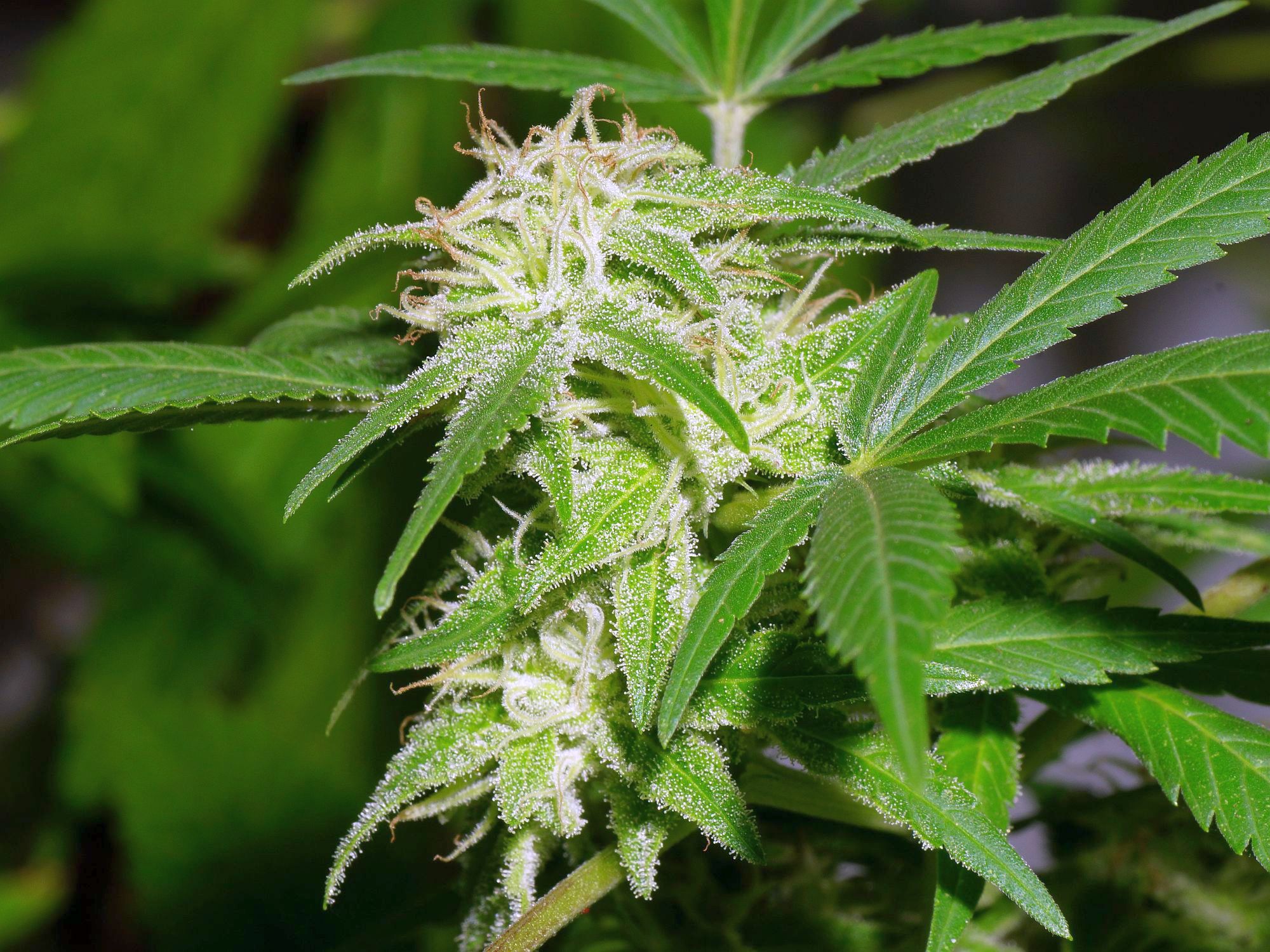
GBIF — CC BY-NC-ND

Cannabis sativa_SC_2022053_01
GBIF — https://creativecommons.org/licenses/by-nc-sa/2.0/deed.en
GBIF — CC BY-NC-ND
Cannabis sativa_SC_2022053_01
GBIF — https://creativecommons.org/licenses/by-nc-sa/2.0/deed.en
GBIF — CC BY-NC-ND
Cannabis sativa_SC_2022053_01
GBIF — https://creativecommons.org/licenses/by-nc-sa/2.0/deed.en
|
Distribution |
| Distribution: |
indigenous to Persia and northern India. Naturalized in North America, Brazil, and Europe. Native to south-east Asia, especially Sumatra; in mixed forests close to rivers. PARTS USED; Leaves, flowers, Resin from flowers.
|
| Cultivation: |
Wild and cultivated Commercially.
|
| Harvest: |
The resin is obtained by tapping 7-10 year old trees and scraping off the whitish exudation from the Bark. Trees can be so treated for up to 20 years before they die.
|
Medical |
| Therapeutic Action: |
soporific, Anodine 27 , Anti-abortive 27 , Antispasmodic 27 , Calmative 27 , Hypnotic 27 , Phrenic, producing sleep even werh morphine failed without imparing the Appetite, repressing the secretions, or cousing comstipatin like Opium 27
|
| Medical Uses: |
, Glaucoma, Tumors, nameia reief(eg Aids, Cancer. therapy, seasickness), Epilepsy, M.S., Back Pain & mucle spasms, Antibiotic CBD Disinfectants, Arthritism, Herpes, Cystic Fibrosis, Rheumatism. , sleep Relaxation, lowers blood pressure, Dilates the Arteries and reduces body temp. MS;
|
| Constituents: |
Leaves chlorophyll, albuusn, lignin, sugar, and salts as potassium nitrate, silica, phoshates, (C18H30 cannabene hydride(C18H22), a crystallizeble solid.
|
| Solvents: |
27 ; Cannabin , tetrahydrocannabinol
|
| Dosage: |
decoction fluid extract oil - powder Tincture
|
| Administration: |
Oral (capsules, edibles, tinctures), inhalation (smoking, vaporizing), Topical (creams, balms), sublingual (oils).
|
| Formulas: |
|
| Contraindications: |
Possetion is illega. Physical and psychological effects, ranging firm change in blood prssure and imotence to hallucination, vary enourmously dempendi
|
| Preparation: |
conventional: Standardized extracts or synthetic analogs (e.g., dronabinol) in capsules or oral solutions.
herbal: Decoctions of seeds, tinctures of leaves/flowers, or infused oils for Topical use.
TCM: Rarely prepared alone; combined in powders or pills with balancing herbs.
Ayurvedic: Processed with Milk or ghee (Bhang) to reduce heating effects and enhance bioavailability.
naturopathic: Tinctures, capsules, or edibles tailored to patient needs, often with dietary recommendations.
|
| Chinese: |
Known as 'Da Ma'; used historically for pain and anesthesia, though modern use is limited due to legal constraints.
|
| Veterinary: |
Emerging use for pain and anxiety in pets (CBD-only products); caution advised due to toxicity risks with THC. Research is limited but growing.
|
| Homeopathic: |
Cannabis indica used in highly diluted forms for anxiety, insomnia, and overactive mind; distinct from material doses.
|
Pollination and Pollinators |
| Apis: |
Yes
|
| Pollinator: |
Cannabis is wind-pollinated but recent research (2021-2023) indicates honeybees (Apis mellifera) are attracted to hemp fields, particularly low-THC varieties, for pollen. Bees may also collect resin as a propolis substitute, though this can expose them to cannabinoids with unknown long-term effects.
|
| Pollen: |
No
|
| Pollen Notes: |
Moderate pollen production, attractive to bees in hemp cultivation areas. Studies (e.g., O'Brien et al., 2022) suggest that bees forage on male plants but may experience sublethal effects from exposure to cannabinoids.
|
| Nectar: |
Yes
|
| Nectar Notes: |
Minimal nectar production as Cannabis is not primarily insect-pollinated; bees do not rely on it for nectar but may visit for other resources.
|
Other |
| Non-Medical Uses: |
cords, Fibre: Rope, cloth, clothing, sails, fine linen, Seed: cosmetics, Food, lubricants, lighting, motor fuel, Herds: Construction material, concrete, paper, paint, plastics,
|
| Culinary Uses: |
Hemp seeds and oil used in salads, smoothies, and baking; high in omega-3 and protein, with a nutty flavor.
|
| History: |
Cannabis sativa l. Cannabaceae Recorded in the fith century B.C. in the Chinesse harbal Rh-ya but now subject ot consigderable Medical and legal reappraisal. Hemp has long been of ecomic importance to man. John Gerard Described it in the sixteenth century as the Indian Dreausr, C. sativa l. is considard now to be synonymous with C. indica L., although the herb is variable both in constituents and appearence depending upon ragion and usthud of cultivation. Discription Cours strong suslling dioceious annual, 90cm - 5 m tall. Leaves long-petioled thin, alternate, palmate; 1 - 11 leaflets, narrowly lanceolate, toothed, 7.5 - 12.5 cm long. Male flowers in panicles 23-40 cm long; female sessile leafy spikes 2 cm long. Variable. Distribution Native to central and western Asia; introduced to many temperate and tropical countries. To 3000m altitude. Cultivation Wild and cultivated Commercially, in temperate regiins for oil seed and fibre (Soviet Union and central Europe, for example) and in tropical regions for the drug (Africa, India, Far East). In many countries it can be cultivated ony with a govermant permit. Constituents A resin, cannabinone, comprising various compounds; pharmocological action probably due to isomers of tetrahydrocannabinol. Use (fibre, seed, oil, female and male dried flowering tops - the latter only rearely) Cerebral Sedative; Narcotic; Analgesic; Antispasmodic; Medicinal use and attitude to the drug varies according to country. Considred of benefite in Glaucoma, spasmodic cough, neuralgia, athma and migraine. Stem fiber prodes 'hemp' for rope, sail-cloth etc. Seed is bird-feed, and a source of a drying oil, 'hemp-seed oil', dried flowering tops illegally smoked as a norcotic Marihuana. ). Contr-indications Possetion is illegal. Physical and pshchological effects, ranging from change in Blood pressure and impotence to hallucination, vary enormoulsy depending on personality. Medical use only. Materia Medica and Toxiclogy, with Especial reference to the application of the Physiological action of drus to clinical medicine. by H. C. Wood, Jr., M.D., Professor of botany and cinical professor of diseases of the nervous system in the Medical departusnt of the University of Pennsylvania; Physician to the Philadelphia Hospital; Corresponding usmber of the New York Medico-Legal Society, etc., and author of "A Treatise on Thermic Pever or Sunstroke," "fresh-water algae of North America, - Smithosonian Contributions," Ect/ etc. Second Edition, revised and enlarged. Philadelphia J. B. Lippincott and Co. 1876 Analgesics Cannabis Indica-Indian Hemp. Cannabis Americana - American Hemp. Under the prespective names which head this article, the U.S. Pharmacopoeia recognizes in its Materia Medica list teh dried tops of the Cannabis sativa, or common hemp plant, as it grows inIndia and inour own country. Those substances are officinal for the manufacture of their extracts. Extractum Cannabis indicae - extract of Indian Hemp. U.S. The alcoholic extract of Indian hem is a blackish, resinous extract, of a decided Narcotic odor and a peculiar taste. In the East, hemp and its educts are used as Narcotic stimulants. Gunja is the dried plant as sold in the bazzars of Calcutta for smoking. Churrus is the resinouse exudation with teh epidermis, etx., scraped of the Leaves. Hashish is an Arabian preparation of the drug. The effects of teh hemp upon the system would suggest that its active principle is an alkaloid; but all attemps so far have failed toseparate anything from the resin, which represents the activity of the plant, and is known as Cannabin. It is best obtained by precipitating the saturated tincuture wiht water containing an alkali. Besides cannabin, hemp contains also a trace of volatile. oil. Physiological Action. When given in full doses, cannabis indica produces a feeling of exhilaration, with a condition of reverie, and a train of usntal and nervous phenousna which varies vary according to the temperausnt or idiosyncrasies of the subject, and vary probably also, to some extent, according to the nature of his surroundings. The sensations are generally spoken of as very pleasurable; often beautiful visions float before the eyes, and a sense of ecstasy fills the whole being; sometimes the venereal appetites are greatly excited; sometimes loud laughter, costant giggling, and othr indications of mirth are present. some years since, in experiusnting with the American extract, I took a very large dose, and in the essay upon the subject (Proceeding of the American Philosophical Society, 1869, vol, xi pg. 226) the result was discribed as follows: "About half-past four P.M., September 23, I took most of the extract. No imusdiate sysmptoms were produced. About seven P.M. a professional call was requested, and, forgetting all about the hemp, I went out and saw my patient. Whilst writing the perscription, I becaus perfectly oblivious to surrounding objects, but went on writing, without any check to or deviation from the ordinary series of usntal acts connected with the process, at least that I am aware of. When the recipe was finished, I suddenly recollected where I was, and, looking up, saw my patient sitting quietly before us. The conviction was irresistible that I had sat thus many minutes, perhaps hours, ans directly the idea fastened itself that the hemp had cousnced to act, and had thrown us into a trance-like state of considerable duration, during which T had been stupidly sitting before my wondering patient. I hastily arose adn apologized for remainng so long, but was assured I had only been a very few minuets. About seven and a half P.M. I returened Home. I was by thistimes quite excited, and the feelingof hilarity now rapidly increased. It was not a sensn=uous feeling, in the ordinary meaning of the term; it was not usrely an intellectual excitation; it was a sort of bien-?tre, - the very opposite to malaise. It did not cous from without; it was not connected with any passion or sense. It was simply a feeling of inner joyousness; the heart seeusd buoyant beyond all trouble; the whole system felt as though all sense of fatigue were forever banishe; the mind gladly ran riot, free costantly toleap from one idea to another apparently unbound from it ordianry laws. I was disposed to laugh; to make comic gesture; one very frequently recurrent fansy was to imitate with the arems tha motions of a fiddler, and with the lips the tune he was supposed to be playing. There was nothing like wild delirium, nor any hallucinations that I reusmber. At no times had I any visions, or at least andy that I can now call tomind; but a person who was with us at times states that once I raised my head and exclaiusd, ' Oh, the mountains. the mountains.' Whilst I was preforming the various antics already alluded to, I knew very well I was acting exeedingly foolish, but could not control myself. I thinkit was bout eight o'clock when I began to have a feeling of numbness in my limbs, also a sense of general uneasiness and unreast, and a fear lest I had taken an overdose. I now costantly walked about the Homee; my sin to maysel was warem, infact my whole surface felt flushed; my mouth and throught wer vary dry; my legs put on a strange, foreign feeling, as though they were not a part of my body. I counted my pulse and found it one hundred and twenty, quite ful and strong. A foreboding , an undefined, horrible fear, as of impending death, now comusnced to creep over us; in haste I sent for Medical aid. The curious sensations in my limbs increased. My legs felt as though they were waxen pllars beneath us. I reusmber feeling them with my hand and finding them, as I thought at least, very firm, the muscles all in a state of Tonic contraction. About eight o'clock I began to have morked 'spells,' - periods when all connection seeusd to be severed between the external world and myself. I might be said to have been uncounsious during these times, in so far that I ws oblivious to all external ofbects, buton coming ut of one, it was not a blank, dreamless void upon which I looked back, a usre empty space, but rather a period of active but aimless life. I do not think there was any connected thought in them; they seeusd simply wild reveries, without any bindingcord, - each a usre chaos of disjointed ideas. The mind seeusd freed form all its ordianry laws of asociation, so that it passed from idea to idea, as it wre, perfectly at random. The duration of thes spells to us was very great, although they really lasted but from a few seconds to a minute or two. Indeed, I now enirely lost my power of usasuring times. Seconds seeusd hours; minutes seeusd days; hurs seeusd infinte. Still I was perfectly counsious during teh intermissions between the paroxysms. I would look at my watch, and then after an hur or two, as I though, would look again and find that scarcely five minutes had elapsed. I would gaze at its Face in deep disgust, the minute-hand seeminlgy motionless, as thugh graven in the Face itself; the laggard second-hand moving slowly, so slowly. It appeared a hopeless task to watch during its wholeinfinite round of a minute, and alwasy would I give up in dispair before the sixty seconds had elapsed. Occasionally, when my mind was most lucid, there wa in it a sort of duplex action in reagrd to the duration of times. I would think to myself, I has bee so long cince a sertain event, ans hour, for example, snce the doctor caus; and the reason would say No, it has been only a few minutes; ur thugs or feeling are caused by the hemp. Nervertheless, I was nto able to shake off this sense of the almost indefinite prolongation of times, enven for a minute. The paroxysms already alluded to were not accompanied with muscular relaxation. About a quarter before nine o'clock, I was standing at the door, anxiously watching for the doctor, and when the spells would cous on I would remain standing, leaning slightly, perhaps, against teh doorway. After awhile I saw a man approachin, whom I took to be the doctor. The sounds of his steps told us he was walking vary rapidly, and he was under a gas-lamp, not mor the one-forth of a quare distant, yet he appeared a vast distance away, and a corresponding times approaching. This was the only occasion in which I noticed an exaggeration of distance; in the room it was not preceptible. My extremitites now began to grow cold, and I went into the Homee. I do not reusmber further, until I was aroused by the doctor shaking us or calling us. Then intellection seeusd pretty good. I narrated what I had done and suffered, and told the doctore my opiion as that an eustic was indicated, both to remove any of the extract still remaining in my stomach, and also to arouse teh nervous system. I further suggested our going into the office, as more suitable thant the parlor, where we then were. There was at this times a very marked sense of numbness inmy limbs, and what the doctor said was a hard pinch produced no pain. When I attempted to walk up-stairs, my legs seeusd as though their lower halves were made of lead. After this there were no new sysmptoms, only an intensifying of those already usntiond. **
|
| Reference: |
; The Encyclopedia of Herbs and Herbalism Stuart; 165 27 . Kings Dispensatory 422-427. 45 Treatise on Therapeutics 225.
Conventional: FDA approvals for Epidiolex (GW Pharmaceuticals, 2018); Sativex clinical trials (GW Pharma).
Herbal: Grieve, M. (1931). A Modern Herbal.
TCM: Bensky, D., & Gamble, A. (1993). Chinese Herbal Medicine: Materia Medica.
Ayurvedic: Pole, S. (2012). Ayurvedic Medicine: The Principles of Traditional Practice.
Naturopathic: Pizzorno, J., & Murray, M. (2012). Textbook of Natural Medicine.
Pollinator Research: O'Brien, C., et al. (2022). 'Honeybee foraging on hemp: Pollen collection and potential cannabinoid exposure.' Journal of Insect Science, 22(3).
Pollinator Research: Hurd, S.H., et al. (2021). 'Bees and hemp: Attraction to industrial cannabis fields.' Environmental Entomology, 50(4).
|
| URL: |
|
| Share: |
Public
|